
- Fly In Style with Easy Cancellations and Tailored Itineraries
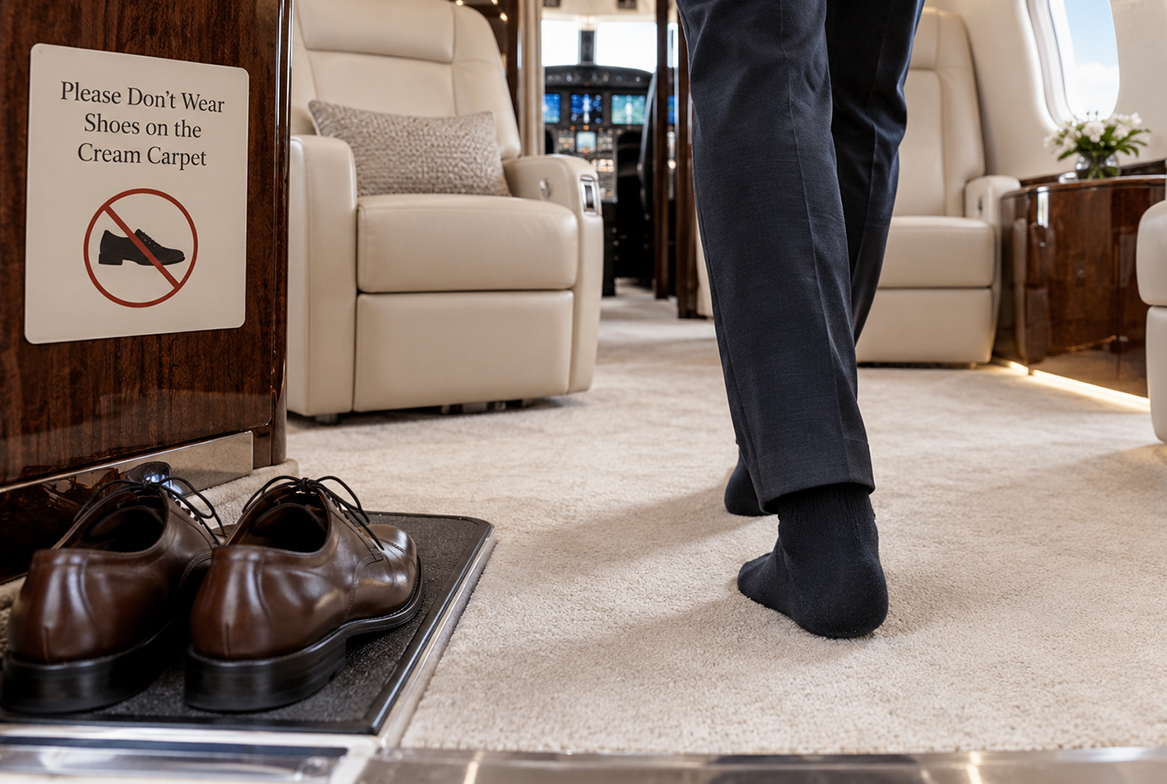
The Ultimate Private Jet Etiquette Guide: Please Don't Wear Shoes on the Cream Carpet
Private flying removes crowded gates, cramped rows, and the battle for overhead space, but it doesn’t remove manners. In fact, a smaller cabin makes every habit more visible. Arriving late, bringing surprise luggage, viewing the crew like background scenery, or planting muddy shoes on a pale carpet can shift the atmosphere. Good etiquette is not about acting wealthy or memorizing mysterious rules. It is about respecting the aircraft, the people operating it, and the passengers sharing your trip. Follow a few sensible principles, and you can enjoy the freedom of private aviation without becoming the story everyone tells afterwards.
Arrive When You Were Asked to Arrive
Private aviation offers a shorter airport process, but that doesn’t turn departure time into a casual suggestion. The crew has prepared the aircraft, coordinated grounded services, reviewed weather, arranged clearances, and planned around airport operating conditions. A late passenger can disrupt operations.
Ask when you should reach the private terminal and build driving time into your schedule. If traffic or another delay threatens your arrival, contact the flight representative promptly. Silence forces everyone else to guess.
Arriving far too early can also create complications if the aircraft, crew, or terminal space is not ready. Follow the arrival window. Punctuality signals respect for the operation and helps preserve the convenience you selected private travel to gain.
Keep the Shoes, Respect the Carpet
The cream-carpet warning is partly playful, yet the principal is real. Aircraft interiors contain fitted materials that are harder to clean or replace than household flooring. Wet soles, sharp heels, loose gravel, and street dirt can leave damage long after the flight ends.
Do not remove your shoes automatically, and do not place them on seats, side ledges, or cabin surfaces. Ask the crew whether cabin slippers are available or whether footwear should remain on. If weather outside is wet, pause at the entrance and follow any guidance given.
Think of the cabin as someone else’s maintained space. You can settle in and feel comfortable without using the interior like your living room after a tiring afternoon.
Declare Every Bag Before Departure
Private jets don’t come with endlessly expandable luggage compartments. Storage size varies sharply between aircraft, and smaller cabins may require soft bags or strict limits. Surprise suitcases can affect space, weight, balance, and even whether the planned aircraft remains suitable.
Tell the charter team how many bags the group will bring, including handbags, equipment cases, garment bags, strollers, and unusual items. Provide approximate dimensions for oversized pieces. If someone adds luggage after booking, share the update before reaching the airport.
Avoid assuming that an empty passenger seat creates extra baggage capacity. Luggage must be stored in designated areas for operational reasons. Accurate packing information allows the team to plan properly and saves everyone from an awkward conversation beside the aircraft.
Let the Crew Run the Cabin
A private cabin feels personal, but it remains as an operating aircraft. Crew instructions are not suggestions, even when the atmosphere is relaxed. Seating requirements, baggage placement, device restrictions, and movement during certain phases all support an orderly flight.
Listen to the briefing, even if you have flown privately before. Aircraft layouts and emergency procedures vary. If the crew asks you to sit, fasten your belt, move an item, or wait before entering a cabin area, respond without turning the request into a debate.
Polite conversation is welcome when workload allows, but recognize when crew members are completing duties. Courtesy doesn’t require formality. A greeting, a clear request, and a sincere thank-you create a far more better tone than snapping fingers, issuing commands, or expecting unspoken preferences to be understood.
Request Food Before You Feel Hungry
Catering on a private flight can be tailored, but the aircraft does not contain an unlimited restaurant kitchen. Specific meals, dietary restrictions, child-friendly items, and preferred beverages usually require advance notice.
Share requests while arranging the trip. Be precise about allergies, portions, serving times, and items you want avoided. “Something light” can mean six different things to six different people. Clear details help the service team prepare an appropriate cabin experience.
Strong-smelling, crumb-heavy, or spill-prone foods can linger in a compact cabin. If you bring your own food, ask whether it is suitable. Use trays, napkins, and containers provided, and avoid balancing open drinks near electronics or pale upholstery. Comfort tastes better when nobody spends the flight fearing a stain.
Respect the Passenger Who Booked the Flight
If you are a guest, don’t assume the invitation gives you control of the cabin. The person arranging the trip may have preferences concerning seats, conversation, work time, food, photography, or additional passengers.
Wait for seating direction rather than claiming a favored spot immediately. Do not invite another traveler, alter baggage plans, or request route changes without speaking to the host. A private aircraft is not a part venue that expands with every enthusiastic suggestion.
Notice the mood. If the host opens a laptop and begins working, it may not be the moment for a loud story or an extended toast. Match the energy of the group, contribute pleasantly, and remember that being invited once does not create an open invitation for future journeys.
Keep Private Conversations Private
The cabin may feel secluded, yet it still contains crew members and fellow passengers. Business plans, personal disputes, contact details, and sensitive documents deserve sensible handling.
Use headphones for calls and media when possible. Lower your voice during confidential conversations, and do not leave papers, screens, or messages visible unnecessarily. If another passenger discusses something private, resist the urge to repeat it after landing.
Photography needs similar judgment. Ask before including passengers or crew in an image. Avoid capturing documents, cabin displays, tail markings, airport locations, or travel details that someone may not want shared. Posting the journey while it is happening can reveal where people are and where they are going. A polished photo is never worth violating another traveler’s privacy.
Use Cabin Features With Permission
Seats, tables, shades, entertainment systems, lighting, and temperature controls may look intuitive, but aircraft fitting may vary. Forcing a mechanism or repeatedly pressing unfamiliar controls can cause damage or interfere with cabin settings.
Ask for a quick explanation before adjusting anything you don’t recognize. Use tables for their intended purpose, keep feet off upholstery and walls, and return shared areas to a reasonable condition after use. If something spills, breaks, or stops working, report it rather than attempting a repair.
The same applies to smoking or vaping, Neither assume either is permitted. Cabin rules, operator policies, aircraft restrictions, and regulations determine what is allowed. Ask beforehand, accept the answer, and avoid putting the crew in an uncomfortable position after departure.
Leave the Cabin With Some Dignity
As landing approaches, gather personal items and follow instructions for securing the cabin. Check seat pockets, charging points, tables, storage areas, and the floor around your seat. Phones, passports, glasses, jewelry, and documents are easily forgotten during a quick exit.
Place waste where directed rather than hiding it beneath seats or leaving it scattered across tables. Report spills or damage honestly. The crew would rather address an issue promptly than discover it after everyone has departed.
Thank the crew and terminal staff. If a gratuity is appropriate within the service arrangement and local custom, ask the charter representative how it should be handled. Good manners at the end of the trip are remembered just as clearly as behavior at the beginning.
The Real Rule Is Consideration
Private jet etiquette is less about obscure customs and more about awareness. Arrive as requested, disclose your language, listen to the crew, protect the cabin, and respect the privacy and comfort of others. Ask before making assumptions, particularly concerning shoes, food, pets, photography, smoking, and cabin equipment.
None of this requires a performance. You do not need a special wardrobe, an affected voice, or insider vocabulary. You need punctuality, clear communication, and an understanding that convenience works because many people have prepared the journey around your group.
View the aircraft as a shared professional space, even when the seats are soft and the mood is relaxed. You will enjoy the flight more, the crew can do their work smoothly, and nobody will need to remember you as the passenger who introduced muddy shoes to the cream carpet.